

Game info
Platformer, adventure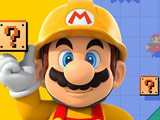
Play Super Mario online and work on the platforming essentials: judge a gap, control your approach and make the landing part of the jump.
Super Mario and the shape of a jump
Super Mario is Nintendo’s platforming series, known for movement through obstacle-filled stages, enemies, coins and carefully arranged routes. A useful way to approach its challenges is to treat each jump as a short plan. The take-off point matters, but so do the speed of the approach and the platform you intend to reach. Passing over a gap is only half the decision.

Read the platform before leaving the ground
Look at the available landing surface before jumping. A narrow platform, an enemy near the edge and a ceiling above the route create different problems. Choose a position from which the next action will still be possible. If you begin the jump while looking only at the gap, you may arrive without enough room to prepare what follows.
Movement and controls
Different Mario releases and browser builds use different input layouts. Read the current player’s controls for movement and jumping before starting. Learn what a short press and a longer press do in the chosen edition rather than assuming that every version responds identically. Practise a simple opening section with deliberate inputs so the results become easy to compare.
Use coins as information, not an obligation
A trail of coins can suggest a line through a stage, but it is still worth checking where that line ends. An optional pickup should not force a poor landing or leave you trapped beside an enemy. When learning an unfamiliar section, choose a reliable route first. Add collection goals once the basic movement is consistent enough to support them.
Separate the enemy from the route
An approaching enemy changes the timing of a safe passage. Watch both its movement and the space around it. Rushing to deal with the enemy can hide a second problem such as a ledge immediately afterwards. If a familiar encounter repeatedly ends badly, compare your starting position and the moment you committed to the move. The correction may be earlier preparation rather than a faster reaction.
Practise one connection at a time
A difficult stage often consists of several ordinary actions connected with little recovery time. Identify the first connection you do not yet control. Practise arriving at its second part in a usable position, then extend the sequence. This gives each retry a clear purpose. Repeating the entire route without noticing where it becomes unreliable can make the same mistake feel unavoidable.
Understanding the edition you are playing
Super Mario covers many official Nintendo games, while the player available on a browser page can have its own stage selection and controls. Consult Nintendo for official product information. Do not assume that an account, purchase or save from a separate release transfers to the browser game. Learn the current menu and choose a stage whose movement you can comfortably read.
A more controlled next attempt
Begin again with one specific improvement: a steadier approach, an earlier look at the landing or an optional coin left for another time. Once that section becomes dependable, keep it and work on the next connection. Platforming becomes more satisfying when an obstacle is something you can understand and repeat, rather than a jump made entirely on hope.
Mario, familiar enemies and a readable platform world
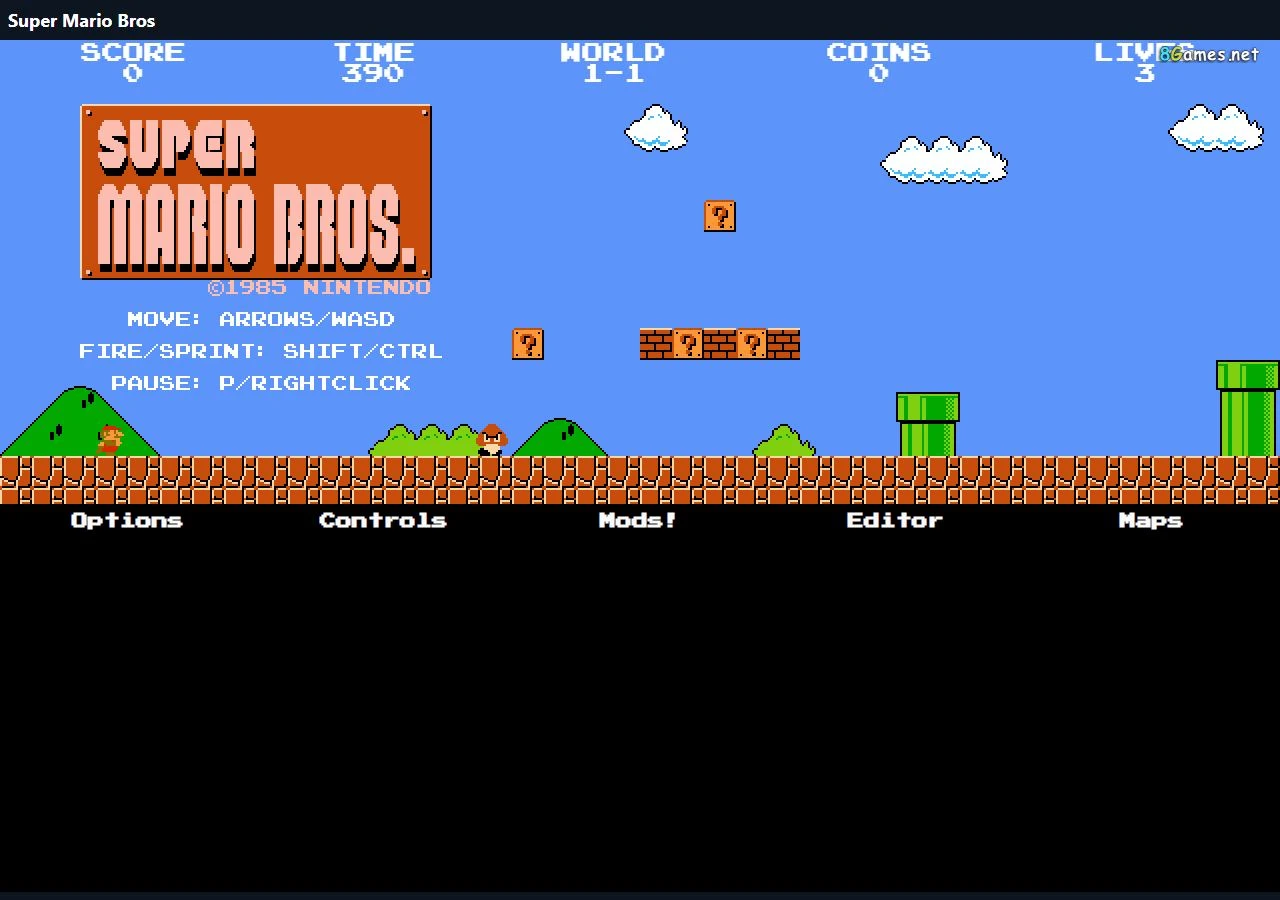
Super Mario's visual language makes many important objects immediately recognisable: Mario's red cap and blue overalls, green pipes, brick blocks, coins and the enemies occupying a route. Recognition helps you begin, but the selected game still establishes what each object does. A pipe can interrupt a path, a block can change the available height and an enemy's movement can turn an easy-looking landing into a timing decision.
In classic two-dimensional Mario play, movement connects those objects into a level. Read the surface after the jump, the position of the next enemy and the space needed to prepare another action. Familiar art does not remove the need to learn the current game's jump and running response.
Power-ups and the purpose of a side route
The wider classic Mario identity includes power-ups such as mushrooms and the Fire Flower. Their exact availability and effect belong to the selected release, so observe the current item before making the next route depend on it. A useful power-up can change the possibilities while leaving gaps and landing positions important.
Optional coin routes and raised platforms give a return visit another purpose. Learn the main crossing first if that makes the stage clearer, then test the side route deliberately. The aim is not to collect every visible object in the first attempt but to understand which route you are choosing and why. Nintendo's Mario pages provide the official series context; the current player's controls and level determine the immediate platforming task.
Learn a section by its landmarks
A classic Mario level is easier to remember as a set of landmarks than as a string of button presses. A pipe, a block formation and a change in ground height each tell you where the next decision begins. Notice the landmark before choosing the movement. This makes a return attempt more useful because you can recognise the same situation without needing to remember every moment of the previous run.
Begin with the route you can see and leave optional detours for a deliberate second visit. A reward above the main line can be interesting without being necessary to understand the first crossing. Once the basic route is dependable, the detour becomes a new question: what approach reaches it and still leaves a safe place to land?
Use the take-off point as part of the plan
If a jump repeatedly falls short or carries too far, compare the starting position. The useful adjustment may be on the ground rather than in the final moment above a gap. A longer run-up, a calmer approach or a different point of departure can create a different landing even when the jump button is used similarly.
Try two nearby starting points on a familiar crossing. Keep the intended destination the same so the difference is easy to see. Then inspect the space after the landing. Reaching the platform is only helpful when Mario can continue from there without an immediate desperate correction. A reliable route connects one controlled position with another.
Treat an enemy's movement as a timing cue
An enemy occupies a changing part of the route. Look at where it will be when you arrive instead of only where it stands at take-off. A short pause on solid ground can make that comparison easier than jumping while still reacting to the previous obstacle. You are choosing a useful moment, not merely trying to press the input before the picture changes.
When a power-up is available, observe its current effect without forgetting the terrain. The new state may add an option while gaps and awkward landings remain important. Keep the next safe surface in view so losing or changing an effect does not also mean losing the route. The selected release establishes the actual behaviour of each item.
Blocks can create a route as well as a reward
A block may be something to jump from, something to hit or part of an obstacle. Look at the surrounding arrangement before interacting. Raising the character to another surface can change which part of the stage is reachable. An item revealed by a block may invite a different route, but the path to it still needs a usable return.
Try one interaction at a time in an unfamiliar area. Several hurried jumps around the same formation can change the view without making its purpose clearer. A deliberate test tells you whether the object altered height, access or the next choice. Carry that observation into the following attempt instead of treating the whole section as an unexplained trick.
A replay with a particular reason
Choose a single aim for the next visit: a cleaner landing, a new raised route or a more controlled approach to one enemy. Compare the result with that aim. A shorter attempt can still be useful if it clarifies the movement you were practising. This makes progress something more specific than whether the whole stage was completed immediately.
Nintendo's Mario website provides the official series context. The current player supplies the controls and the actual level being attempted. Different Mario games and browser platformers can share familiar art without identical movement. Read those inputs first, then let the pipes, blocks and surfaces become landmarks in a route you can increasingly understand.
Worked example: reaching a platform but missing the next step
Suppose a jump clears the gap but leaves the character or ball moving towards the far edge. The crossing succeeded, yet the position after it is difficult. Compare a shorter approach with the previous take-off, and watch the landing rather than only the height of the jump. The useful change may be momentum before leaving the ground rather than a later correction in the air.
Repeat the comparison on a familiar surface. Keep the intended destination the same so the effect of the approach is clear. Then inspect the next obstacle from the new landing position. A route becomes dependable when one movement leaves a sensible starting point for the next. That is more useful than treating each gap as an isolated test of reaction speed.
Worked example: an optional object beyond the safe line
A reward can invite a route that is not necessary to complete the stage. Decide whether the current attempt is for learning that route or for reaching the exit. Both are legitimate goals, but they create different priorities. A first visit may be more informative when you learn the main crossing before combining it with an optional collection challenge.
When an object can be moved or activated, observe the result of one small interaction. Notice whether it changes a landing height, opens access or alters the timing of the route. Try to describe that effect before making another large change. Several uncontrolled interactions can make the puzzle harder to understand without proving that the original idea was wrong.
Checkpoints are opportunities for comparison
Use a restart near a difficult section to repeat the same question under familiar conditions. Change one part of the approach and keep the successful parts steady. If the game does not provide a nearby checkpoint, practise the opening until it requires less attention; that leaves more concentration for the unfamiliar section. Confirm the selected player's actual jump and movement inputs instead of assuming every platformer has the same physics. A comfortable view of the destination and a clear control response let the level's timing remain the challenge.
Related games
Frequently asked questions
Who creates the official Super Mario games?
Nintendo publishes the official Super Mario series.
Should I collect every coin while learning?
Use a reliable route first, then add optional collection goals.
What should I watch during a jump?
The landing surface and the first action you will need after landing.
Do all Mario versions use the same controls?
No. Check the active player and its instructions.

Good game? Tell us.0
Share a tip, celebrate a high score, or tell us what you think. Keep it friendly.